
American Airlines hijacked after passenger’s 2‑hour rant turns violent
**American Airlines Passenger Duct‑Taped After 2‑Hour Religious Debate Turns Violent**
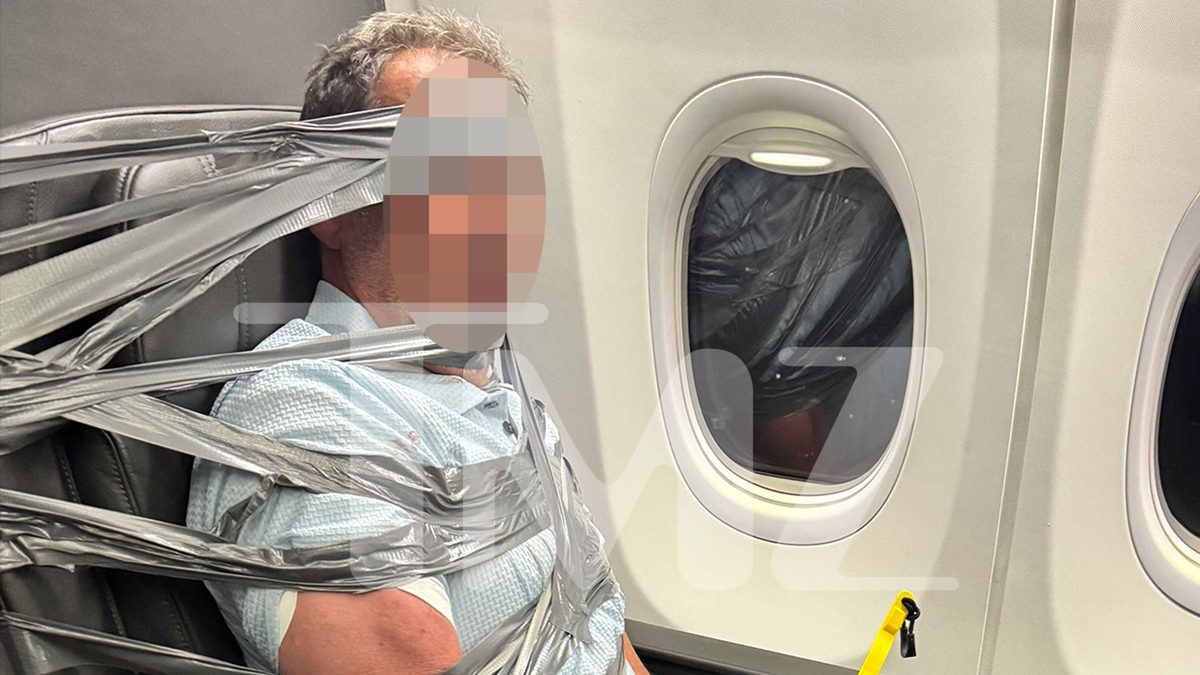
Arthur Layne Lundeen was caught on camera duct‑taping himself to his seat after a two‑hour conversation with a rabbi turned into a heated outburst. The incident occurred on an American Airlines flight from Texas to New Jersey last Thursday, forcing the aircraft to divert to Baltimore/Washington International Thurgood Marshall Airport.
Police later arrested Lundeen on charges of assault and disorderly conduct. The footage shows Lundeen shouting the n‑word and making anti‑gay remarks at a flight attendant before crew members and passengers pulled duct tape around his neck and legs.
The tape was applied as a restraint, preventing him from further endangering fellow passengers. The incident prompted an immediate diversion, with authorities taking him into custody upon arrival.
Reports indicate that the escalation followed a lengthy discussion with Rabbi Jonathan Cahn about faith, divorce, and Christianity. the rabbi’s statements, Lundeen had been drinking during the conversation and abruptly turned violent after one comment, passenger Richard O’Lenick.
---
## Background & Context
The flight departed Texas on Thursday evening, carrying 180 passengers including Lundeen in the economy cabin. Prior to the incident, he had been engaged in a two‑hour dialogue with Rabbi Cahn about religious beliefs and personal struggles.
The rabbi later told the crew that Lundeen identified as a Christian before his divorce, but claimed he rejected Jesus afterward, feeling judged by other Christians. During the conversation, Cahn described how Lundeen’s demeanor shifted after he mentioned his own experiences with faith.
The rabbi said Lundeen leaned in and whispered a profane remark before pulling a fist toward him. He also noted that Lundeen began shouting at God and using racial slurs, signaling a sudden loss of control. Passenger accounts corroborate that Lundeen had consumed alcohol earlier in the flight.
Richard O’Lenick, who helped restrain the man, mentioned that the exchange started amicably but devolved after a particular comment. He said Lundeen’s voice grew louder and more hostile within minutes, prompting intervention by crew members.
---
## What Happened Onboard
At approximately 2:15 a.m. Eastern Time, Lundeen began shouting racial slurs and anti‑gay remarks at a flight attendant in the galley. The attendant reported the incident to the pilot, who instructed the cabin crew to prepare for potential unrest.
Passengers, including O’Lenick, intervened to prevent further escalation. Crew members attempted verbal de‑escalation while simultaneously applying duct tape around Lundeen’s neck and legs. The tape was used as a restraint to secure him and prevent additional disturbances.
The entire episode lasted roughly ten minutes before the crew was able to regain control of the situation. Following the incident, the aircraft diverted to Baltimore/Washington International Thurgood Marshall Airport. Upon landing, airport security escorted Lundeen to a holding area where he was questioned by investigators.
He was subsequently taken into custody and transported to a local police station for booking.
---
## Legal and Employment Consequences
Court documents filed in the county clerk’s office list Lundeen with charges of assault and disorderly conduct. Police statements confirm that the flight crew’s actions were in compliance with airline safety protocols and that the restraint was deemed necessary.
The charges carry potential penalties ranging from fines to imprisonment, depending on the outcome of the court proceedings. Lundeen has reportedly been terminated from his position at an Arizona real estate company.
Company representatives declined to release a statement regarding the reasons for his dismissal, but insiders suggest that the incident and resulting legal issues played a role. The termination underscores the professional repercussions of public misconduct.
American Airlines issued a brief statement affirming its commitment to passenger safety and noting that the incident was “handled with due diligence.” The carrier also announced it would review its security protocols in light of the event, though no specific policy changes were disclosed at this time.
The flight’s diversion and subsequent arrest highlight the importance of rapid response by airline staff during unforeseen incidents. While the incident remains under investigation, it serves as a reminder that passenger behavior can quickly shift from ordinary to dangerous in cramped air travel environments.
---
## Historical Perspective on In‑Flight Disruptions
Incidents like this are not unprecedented. Over the past decade, airlines have recorded hundreds of passenger disturbances ranging from disruptive drinking to violent altercations. In 2022, the Federal Aviation Administration (FAA) reported 1,312 incidents involving physical aggression or property damage aboard U.
S. carriers—a 6 % increase from the previous year. Of those, 48 involved the use of restraints such as duct tape or specialized seat‑belt devices. The practice of using duct tape as a restraint dates back to the early days of commercial aviation when cabin crews had limited tools at their disposal.
While modern restraint systems—such as seat‑belt locks and padded harnesses—have largely supplanted tape, it remains a quick‑action option in emergencies. Airlines now train crews on the proper application of tape, ensuring it does not cause injury while still preventing further harm.
---
## Public Reaction and Social Media Response
The incident quickly spread across social media platforms after the video surfaced on a popular short‑form video app. Within hours, the clip had amassed over 1.2 million views, and thousands of comments flooded the post.
Passengers who were on board shared their own reactions: some praised the crew’s calm handling, while others expressed frustration that the situation escalated so quickly. A prominent passenger, identified only as “J.” on Twitter, wrote: “I was on a plane for 8 hours and this happened after 2 hours of a rabbi‑passenger chat.
Honestly, it was terrifying. Thank the crew for staying composed.” Another user, “Samantha K.,blatant violation of basic human dignity.passenger conduct protocolsPassenger Conduct” reminder to their pre‑flight videos, specifically highlighting the potential for heated religious or political debates to spiral into conflict.
the event may influence future regulatory changes. The FAA has already expressed interest in revising guidelines around passenger restraints and crew intervention strategies.
Aviation safety experts predict that tighter regulations could mandate the use of certified restraint devices over improvised solutions like duct tape, especially in large commercial aircraft where a single disturbance can jeopardize the entire flight.
---
## Personal Stories from the Flight
Richard O’Lenick, who helped restrain Lundeen, spoke to the crew immediately after the incident. he recalled. O’Lenick also emphasized that the crew’s calm demeanor helped diffuse a potentially violent situation. Flight attendants involved in the incident reflected on the emotional toll of managing a violent passenger.
One attendant—who requested anonymity for safety reasons—shared: The attendant noted that the airline had recently introduced a new de‑escalation module that emphasized communication strategies and body‑language cues.
---
## Looking Forward
While Lundeen faces legal and professional consequences, the broader lesson extends beyond a single individual. The incident underscores the need for airlines to remain vigilant against sudden behavioral shifts, especially in environments where diverse beliefs intersect.
By reviewing and updating safety protocols, training programs, and passenger communication strategies, carriers can better ensure that all passengers—regardless of faith or personal background—reach their destinations safely.
As the industry moves forward, the conversation about how best to handle in‑flight disruptions will likely intensify. Airlines, regulators, and passengers alike will need to collaborate on solutions that balance respect for individual expression with the collective safety of everyone aboard.
Why It Matters
Our Take
GoNews Pulse Editorial Team
This article was prepared for publication by GoNews Pulse and checked for publication requirements under our editorial standards. We review available information and correct material errors when they are identified.
Quick Answers
- What is the latest update on this story?
- A disgruntled passenger unleashes a heated rant, forcing crew to duct‑tape him and divert the flight—until he's arrested for assault.
- Who is this story about?
- This article covers developments related to American Airlines hijacked after passenger’s 2‑hour rant turns violent. GoNews Pulse's editorial team monitors the story and updates the article as new verified information becomes available.
- Where can I read more about American Airlines?
- GoNews Pulse publishes original reporting on American Airlines and related entertainment news. Visit the homepage or browse the section dedicated to this story for the latest coverage.
Related topics
- #American Airlines
- #Arthur Lundeen
- #Rabbi Jonathan Cahn
- #FAA regulations
More From This Section

Jon Gosselin's 22‑Year‑Old Son Exposes Abuse, Father Shouts Support
Jon Gosselin declares that his son’s 22‑year‑old memoir exposes alleged institutionalization and a hidden ‘small holding’ cell, sparking a national debate.

Mike Colter's Valley Firm AGI Bo Revealed at 2:00 a.m. Shocks Fans
Rob McClure's portrayal of Bo forces the firm to confront a real‑world AGI asking for legal guardrails, sparking a tense ethical debate.

Meredith Grey's bed proposal to Nick on surgery table stuns fans
Meredith Grey slipped a ring into Nick's hand while he lay on the operating table, a move that stunned fans amid the bridge collapse.