
Susana de Sousa Dias Reveals Her Top 10 Documentaries at IDFA 2025
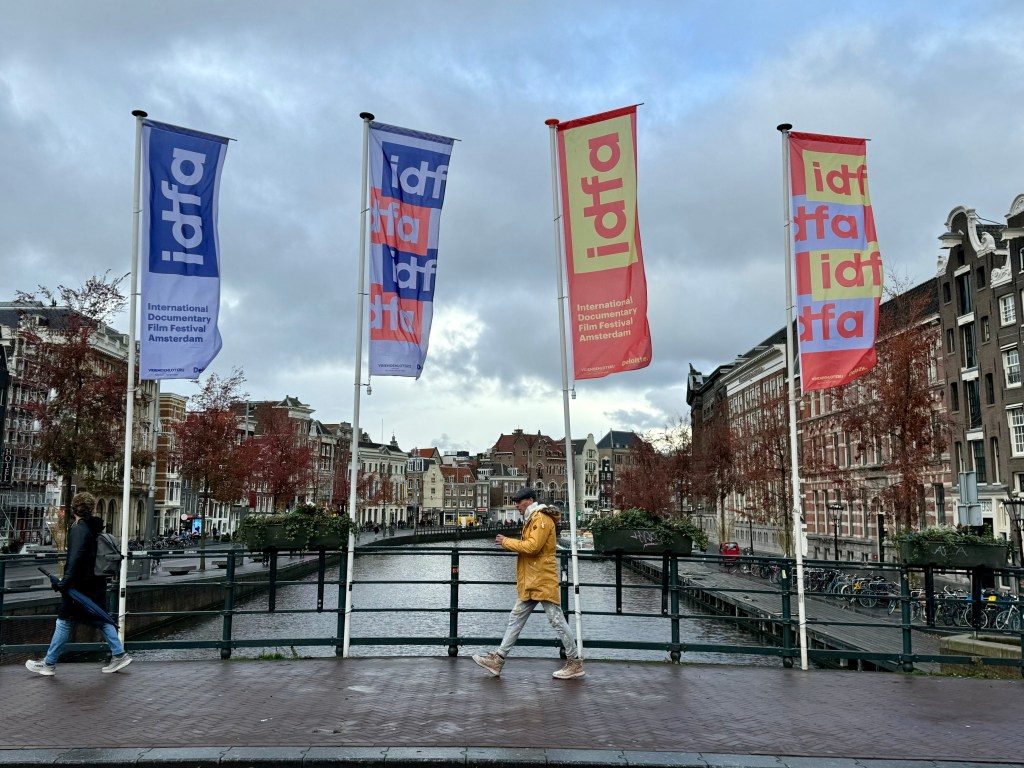
**IDFA Names Susana de Sousa Dias 2025 Guest of Honor, Unveils Retrospective and Top 10 Selections**
The International Documentary Festival Amsterdam (IDFA) announced that Portuguese filmmaker, curator, and academic Susana de Sousa Dias will be its 2025 Guest of Honor.
The festival, running from November 13 to 23 in Amsterdam, will screen a full retrospective of Dias’s work and host a talk in which she will choose ten films she considers essential.
Dias’s latest project, *Fordlândia Panacea* (2025), is a documentary that excavates the former company town founded by Henry Ford in the Amazon rainforest in 1928.
Her earlier works—*Still Life* (2005), *48* (2009), and *Fordlandia Malaise* (2019)—have earned international acclaim for their archival interrogation of dictatorship, colonial legacies, and collective memory.
The festival marks the first year under artistic director Isabel Arrate Fernandez, who succeeded Orwa Nyrabia after a seven‑year tenure. IDFA’s growth since its 1988 founding has seen it become the world’s largest documentary festival, with previous Guest of Honor honorees including Wang Bing (2023) and Laura Poitras (2022).
## Background & Context
IDFA’s 19th edition will feature Dias’s retrospective, which includes films such as *48* (2009), *Criminal Case 141/53* (2000), *Fordlandia Malaise* (2019), and *Post Criminal Case* (2025).
Her work is noted for “creating space for distance and reflection” and reframing archival footage to reveal “erased histories of violence and resistance to authority.” The festival’s long‑running theme of political histories aligns closely with Dias’s focus on dictatorship, colonialism, and memory.
The festival’s Dead Angle program returns this year with a new multiyear initiative that “looks at the systemic structures that shape our lives—using documentary cinema to reveal what remains outside our direct field of vision.” The 2025 theme focuses on Institutions, inviting critical examination of democratic processes and colonial legacies through titles like *State Legislature* (2006) and *How to Build a Library* (2025).
In parallel, IDFA DocLab’s 19th edition adopts the theme Off the Internet, interrogating the paradox of constant connectivity and the desire for disconnection. The program promises immersive experiences such as *Nothing to See Here* by Celine Daemen and *Handle with Care* by Ontroerend Goed, both premiering at the festival.
## What de Sousa Dias Is Bringing
Dias’s Top 10 list will feature films that echo her own concerns about collective memory and political narratives.
Two entries—Sarah Maldoror’s *Monangambééé* (1968) and Harun Farocki’s *Images of the World and the Inscription of War* (1989)—explore how filmmakers rewrite their political histories, resonating with Dias’s archival approach.
The list also includes works from diverse regions, such as *Río Turbio* (2020) by Tatiana Mazú González and *Rosa de Areia* (1989) by Margarida Cordeiro and António Reis.
In her 2005 film *Still Life*, Dias juxtaposed photographs from Portugal’s Estado Novo regime with contemporary testimonies, exposing the violence embedded in every image. Her 2009 documentary *48* continued this interrogation by pairing regime photographs of political prisoners with later testimonies.
These films exemplify her signature style of reframing power structures through archival imagery.
The guest‑of‑honor talk will allow Dias to reflect on her career trajectory, the evolution of documentary form, and her ongoing exploration of how historical narratives are constructed and contested.
She will also discuss the thematic underpinnings that guided her selection of the Top 10 films, offering insight into the broader discourse surrounding memory and political representation.
## Looking Ahead at IDFA 2025
The full schedule for Dead Angle: Institutions, including confirmed titles like *Frederick Wiseman’s State Legislature* (2006) and *Checks and Balances* (2015), will be released on Tuesday, October 14.
DocLab’s Off the Internet program will likewise receive its complete lineup on the same date, with early announcements already highlighting immersive works that push the boundaries of presence and connection.
General ticket sales for the festival are set to open on October 29, giving attendees a chance to experience both Dias’s retrospective and the new programs before they launch in November.
The festival’s reputation for world premieres and its role in shaping Oscar‑eligible documentary selections add further significance to this year’s lineup.
As the event approaches, fans of Dias’s archival documentaries can anticipate an unprecedented look at her oeuvre alongside a curated selection of films that challenge conventional narratives of power, memory, and institutional critique.
The festival promises to be a landmark celebration of documentary cinema’s capacity to interrogate the past and illuminate the structures that shape our present.
## The Rise of IDFA: From Small Gathering to Global Powerhouse
When IDFA began in 1988 as a modest meeting of ten documentary enthusiasts in Amsterdam’s Jordaan district, its founders envisioned a platform where filmmakers could share work that often fell outside mainstream festivals.
Over three decades, the event expanded to accommodate thousands of visitors, hundreds of screenings, and dozens of parallel panels. Its evolution mirrored the broader democratization of media: as technology lowered production costs, an influx of voices—particularly from former colonies—found a stage at IDFA.
The festival’s commitment to political documentary has consistently set it apart. While many festivals prioritize narrative or experimental works, IDFA’s curatorial focus on “how we remember” and “how we see history” has attracted scholars, activists, and policymakers alike.
This intellectual gravitas has turned the event into a breeding ground for films that later receive international awards and influence public policy debates.
## Fan Reaction to Dias’s Selection
Social media buzz around Dias’s appointment has been vibrant. Filmmakers across Latin America, Africa, and Europe have taken to Twitter and Instagram to applaud her emphasis on archival truth.
One Argentine documentary producer wrote, “Susana’s work reminds us that the past is never finished; it is a living archive we can interrogate.” A Brazilian activist community shared a montage of their own testimonies that mirror themes in *48*, emphasizing how Dias’s films empower marginalized voices.
On the festival’s official Discord server, fans organized “pre‑IDFA watch parties” for *Still Life* and *Fordlandia Malaise*. Participants discussed how Dias’s juxtaposition of images and testimonies creates an “emotional distance” that encourages critical reflection.
Many viewers noted that watching her retrospective felt like a guided tour through the hidden corners of Portugal’s authoritarian past.
## Industry Impact: Why IDFA 2025 Matters
Beyond its cultural significance, IDFA 2025 serves as a barometer for the documentary market. Distributors and streaming platforms use the festival’s selections to gauge audience appetite. Dias’s inclusion signals a continued appetite for archival‑driven narratives that question dominant historical narratives.
Her Top 10 list will likely influence acquisition decisions, with several titles already in talks for global distribution.
the festival’s partnership with DocLab demonstrates an industry shift toward immersive storytelling. By highlighting projects like *Nothing to See Here*, IDFA encourages filmmakers to experiment with VR and spatial audio—technologies that are increasingly crucial for audiences seeking deeper engagement.
The Dead Angle program’s focus on institutions aligns with a broader trend of “institutional critique” in documentary filmmaking. As governments face scrutiny over transparency, films that dissect parliamentary processes or bureaucratic systems resonate strongly with contemporary audiences.
IDFA’s emphasis on this theme may inspire filmmakers to pursue more investigative projects in the coming years.
## Closing Thoughts
IDFA’s decision to honor Susana de Sousa Dias underscores a celebration of documentary cinema that refuses to accept history at face value. Through archival restoration, testimonies, and critical framing, Dias’s body of work invites viewers to confront the uncomfortable layers of their collective past.
As the festival draws near, audiences worldwide anticipate a rare convergence of retrospection, critique, and forward‑looking innovation—an event that will shape not only the trajectory of documentary film but also how societies remember and reckon with their histories.
Why It Matters
Our Take
GoNews Pulse Editorial Team
This article was prepared for publication by GoNews Pulse and checked for publication requirements under our editorial standards. We review available information and correct material errors when they are identified.
Quick Answers
- What is the latest update on this story?
- She picks her Top 10 documentaries and explains why each is essential—miss it and miss a key moment of cinematic history.
- Who is this story about?
- This article covers developments related to Susana de Sousa Dias Reveals Her Top 10 Documentaries at IDFA 2025. GoNews Pulse's editorial team monitors the story and updates the article as new verified information becomes available.
- Where can I read more about IDFA?
- GoNews Pulse publishes original reporting on IDFA and related entertainment news. Visit the homepage or browse the section dedicated to this story for the latest coverage.
Related topics
- #IDFA
- #Institutional critique
- #DocLab
More From This Section

Jon Gosselin's 22‑Year‑Old Son Exposes Abuse, Father Shouts Support
Jon Gosselin declares that his son’s 22‑year‑old memoir exposes alleged institutionalization and a hidden ‘small holding’ cell, sparking a national debate.

Mike Colter's Valley Firm AGI Bo Revealed at 2:00 a.m. Shocks Fans
Rob McClure's portrayal of Bo forces the firm to confront a real‑world AGI asking for legal guardrails, sparking a tense ethical debate.

Meredith Grey's bed proposal to Nick on surgery table stuns fans
Meredith Grey slipped a ring into Nick's hand while he lay on the operating table, a move that stunned fans amid the bridge collapse.