
Curry Barker, Sian Heder, Alex Gibney unveil TIFF 2026 secrets
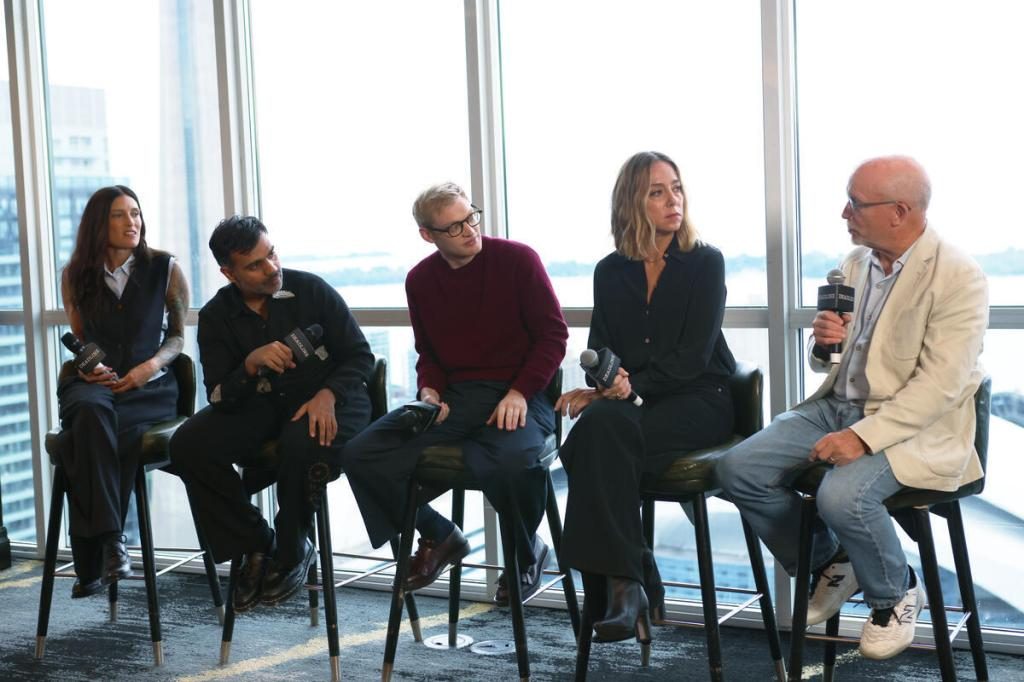
On a crisp September morning in 2026, the historic Bisha Hotel in downtown Toronto became a crucible of creative conversation. Five directors—Curry Barker, Sian Heder, Alex Gibney, Rachel Morrison and Bassam Tariq—sat around a polished oak table to dissect the grit and of modern filmmaking.
The panel, part of TIFF’s long‑running “Art of Directing” showcase, drew a packed room of film students, seasoned crew members and enthusiastic cinephiles.
In addition to their personal stories, the directors highlighted the significance of receiving their first Directors Guild of America (DGA) membership cards, a rite of passage that signals both responsibility and recognition in an industry still finding its footing in the digital age.
## Background & Context
The Toronto International Film Festival, founded in 1976, has always placed a premium on auteur-driven projects. Its “Art of Directing” series—launched in 2013—was conceived as a forum where filmmakers could share candid insights into their craft, from early script read‑throughs to the final cut.
This year's installment was particularly resonant: it coincided with the first‑ever DGA cards awarded to emerging directors at TIFF, a symbolic bridge between indie experimentation and guild‑sanctioned production standards.
Curry Barker, known for his razor‑sharp comedic timing in the cult hit *Obsession* (2024), had recently wrapped *Anything But Ghosts*, a supernatural horror–comedy co‑produced by Blumhouse. Barker’s ascent from independent shorts to a mainstream studio film underscores the shifting pathways available to new voices in Hollywood.
Sian Heder, a screenwriter‑turned‑director whose debut feature *Being Heumann* (2025) broke new ground with an all‑disabled ensemble cast, had been celebrated for her nuanced storytelling. Her journey from the indie circuit to Apple’s high‑profile platform illustrates the expanding avenues for diverse narratives.
Alex Gibney, a veteran documentary filmmaker with a reputation for tackling controversial subjects (*The Corporation*, *Citizenfour*), had recently ventured into scripted territory with *The Musk Protocol* (2026), a biopic that leveraged cutting‑edge avatar technology to circumvent the subject’s unwillingness to participate.
Rachel Morrison, famed as the first woman ever nominated for an Oscar for cinematography, transitioned from visual storytelling to narrative direction with *Love of Your Life*. Her work spans three continents and showcases her adaptability in a globalized production environment.
Bassam Tariq, a Syrian‑American auteur who made waves with his gritty crime drama *The Last Samaritan* (2023), returned to the small screen with *Your Mother Your Mother Your Mother*, an action‑packed series that fuses cultural specificity with universal thriller tropes.
The panelists’ backgrounds set the stage for a dialogue that spanned genre, technology, and social responsibility. Their shared experiences provided a roadmap for both established and aspiring directors navigating the evolving film landscape.
## What the Directors Shared
### Curry Barker on *Anything But Ghosts*
Barker’s narrative began with a tense moment: during a rush‑day shoot in an abandoned warehouse, he was confronted with a 130‑page script that needed to be condensed into 26 shooting days. “I had more lines than anyone in the movie,” he joked, but the joke was underscored by genuine anxiety.
When Zach Kregger suggested cutting 30 pages, Barker resisted. “I wanted to see every line, every beat,” he explained. The decision to keep the full script paid off; the film’s pacing felt unhurried yet urgent, his commitment to a complete vision.
The audience heard about the day *Obsession*’s climax went awry—a fire alarm triggered on set, forcing a two‑hour delay. That same day, Barker admitted that *Anything But Ghosts* became the “easiest” in hindsight. The key factor was the newfound trust between him and his crew, forged over a year of collaboration.
He also highlighted the DGA card’s role in providing access to union benefits and a sense of professional legitimacy, which eased logistical headaches during overseas shoots.
### Sian Heder on *Being Heumann*
Heder opened with an anecdote about creating an accessible set for 12 disabled leads and 60 background actors. “We had to build our trailers from scratch,” she recalled.
She described how the absence of a pre‑existing accessibility framework in North America forced her to design everything from wheelchair‑accessible camera rigs to audio‑descriptive scripts.
Her revelation that only one other accessible trailer had existed in the United States before *Being Heumann* was met with murmurs of disbelief. “There is no map for how to build an accessibility team,” Heder said, pointing out the scarcity of resources for disabled talent.
She added that the film’s success—both critically and commercially—served as a catalyst for future productions to prioritize inclusivity.
Fans who had followed her career from *Wonder Woman 1984* saw Heder’s shift to documentary‑style storytelling in *Being Heumann* as a natural evolution: “She wants to capture lived experience, not just tell a story,” one attendee remarked.
Heder’s emphasis on accessibility has already prompted several major studios to adopt similar protocols for upcoming projects.
### Alex Gibney on *The Musk Protocol*
Gibney recounted the absurdity of interviewing Elon Musk in 2025. “When I asked for an interview, he replied with a tweet reading, ‘Gibney is a douche,’” he told the audience. In response, he delivered the single word “Douché” in the film’s opening credits, a nod to his playful defiance.
Without direct footage, Gibney turned to public statements—tweets, interviews, press releases—to reconstruct Musk’s persona. He enlisted a team of animators and motion‑capture specialists to create a realistic avatar that could be positioned in two camera angles.
The final product became the film’s central character, with Gibney’s voiceover guiding viewers through Musk’s controversial actions.
The panel highlighted how this approach blurred the lines between documentary and fiction, raising questions about authenticity, representation, and creative license.
The use of avatars, Gibson said, “pushed the boundaries of what a biopic can be.” The technique has since been cited as an emerging trend in documentary filmmaking, especially when subjects are reluctant or unreachable.
### Rachel Morrison on *Love of Your Life*
Morrison’s story spanned three continents and four distinct cities: London, Lisbon, New Orleans, and Boston. She described the logistical nightmare of coordinating schedules across time zones while ensuring that each location maintained its unique cultural texture.
“My line producer would say that the greatest challenge was shooting in three countries, four cities, different states,” she said.
Morrison’s experience as a cinematographer helped her navigate these challenges. She used a unified visual style—soft, natural lighting and handheld cameras—to keep the series cohesive despite its geographic spread. Her approach earned praise from fans who appreciated the film’s realistic portrayal of transatlantic relationships.
The panelists noted how Morrison’s transition from cinematographer to director exemplified the fluidity of roles in contemporary film production. Her insights on balancing artistic vision with logistical realities have already influenced several up‑and‑coming directors.
### Bassam Tariq on *Your Mother Your Mother Your Mother*
Tariq’s action series, featuring Mahershala Ali as an American Muslim hitman, was filmed over a demanding 30‑day schedule that included five high‑intensity set pieces.
He recalled advice from his late editor‑mentor: “In the first five minutes of the film, you tell the audience how to watch the movie.” The guidance shaped Tariq’s opening sequence, which immediately establishes tone and stakes.
The series’ plot—balancing cultural identity with global crime—tapped into contemporary conversations about representation in genre films. Fans who followed Tariq’s earlier work on *The Last Samaritan* were eager to see how he’d apply those narrative techniques to a more mainstream platform.
The panel discussed the importance of authenticity, especially when portraying a Muslim protagonist in an action context that could easily fall into stereotypes.
Tariq also highlighted the DGA card’s role in securing union representation for his international crew—a necessity for a project that spanned multiple jurisdictions. His experience illustrates how guild membership can streamline complex, cross‑border productions.
## Implications and Takeaways
The panel underscored how directors adapt to a landscape where budgets are tightening, technology is advancing at an unprecedented pace, and social expectations for inclusivity are intensifying.
The DGA cards were framed not just as symbolic, but as practical tools: they grant access to standardized labor agreements, safety protocols, and collective bargaining power—elements that became increasingly critical during the pandemic‑driven disruptions of the previous decade.
Key takeaways include:
* **Risk‑Tolerant Vision** – Barker’s insistence on keeping a full script demonstrates that calculated risk can yield creative dividends.
Directors should weigh the cost of extra time against the benefit of preserving narrative integrity. * **Inclusive Storytelling** – Heder’s accessible set challenges the industry to adopt systematic accessibility frameworks.
Her success indicates that representation is not only ethical but commercially viable. * **Technological Innovation** – Gibney’s avatar‑based biopic exemplifies how technology can circumvent traditional barriers.
The technique may become standard for projects involving elusive subjects or sensitive content. * **Cross‑Cultural Coordination** – Morrison’s trans‑national production highlights the importance of unified visual language and flexible scheduling.
Her experience underscores the value of a strong line producer in managing complex logistics. * **Narrative Authenticity in Genre** – Tariq’s advice on opening sequences reminds directors that clarity in storytelling is essential, especially when navigating cultural nuances in action films.
Fan reaction during the Q&A was electric. Viewers asked whether these innovations would become industry norms, and many expressed excitement about seeing more diverse stories told with fresh techniques. Social media threads buzzed with phrases like “DGA cards are the new passport” and “avatars can save the documentary world.”
Industry insiders noted that the panel’s discussions could influence future festival programming, encouraging organizers to prioritize panels that address technical innovation and inclusivity.
The panel’s emphasis on guild membership may also push studios to re‑examine their hiring practices, ensuring that emerging directors have the support needed to navigate large‑scale projects.
## Looking Forward
As TIFF’s “Art of Directing” series continues to evolve, the 2026 panel stands as a milestone for emerging filmmakers. It showcases a blend of bold risk‑taking, compassionate storytelling, and technological ingenuity—qualities that will define the next generation of directors.
The dialogue sparked by these five voices offers both cautionary tales and innovative strategies for aspiring filmmakers. By embracing risk, championing inclusivity, and leveraging technology, the film community can forge a path toward richer, more authentic cinema—an exciting prospect for audiences worldwide.
Why It Matters
Our Take
GoNews Pulse Editorial Team
This article was prepared for publication by GoNews Pulse and checked for publication requirements under our editorial standards. We review available information and correct material errors when they are identified.
Quick Answers
- What is the latest update on this story?
- They hint at a game‑changing DGA card secret, accessibility breakthroughs, and cross‑border production hacks that could reshape filmmaking at TIFF 2026.
- Who is this story about?
- This article covers developments related to Curry Barker, Sian Heder, Alex Gibney unveil TIFF 2026 secrets. GoNews Pulse's editorial team monitors the story and updates the article as new verified information becomes available.
- Where can I read more about TIFF?
- GoNews Pulse publishes original reporting on TIFF and related entertainment news. Visit the homepage or browse the section dedicated to this story for the latest coverage.
Related topics
- #TIFF
- #DGA cards
- #Sian Heder
- #Alex Gibney
- #Bassam Tariq
More From This Section

Jon Gosselin's 22‑Year‑Old Son Exposes Abuse, Father Shouts Support
Jon Gosselin declares that his son’s 22‑year‑old memoir exposes alleged institutionalization and a hidden ‘small holding’ cell, sparking a national debate.

Mike Colter's Valley Firm AGI Bo Revealed at 2:00 a.m. Shocks Fans
Rob McClure's portrayal of Bo forces the firm to confront a real‑world AGI asking for legal guardrails, sparking a tense ethical debate.

Meredith Grey's bed proposal to Nick on surgery table stuns fans
Meredith Grey slipped a ring into Nick's hand while he lay on the operating table, a move that stunned fans amid the bridge collapse.