
Chuck Norris dies at 86 after shocking last battle in Hawaii
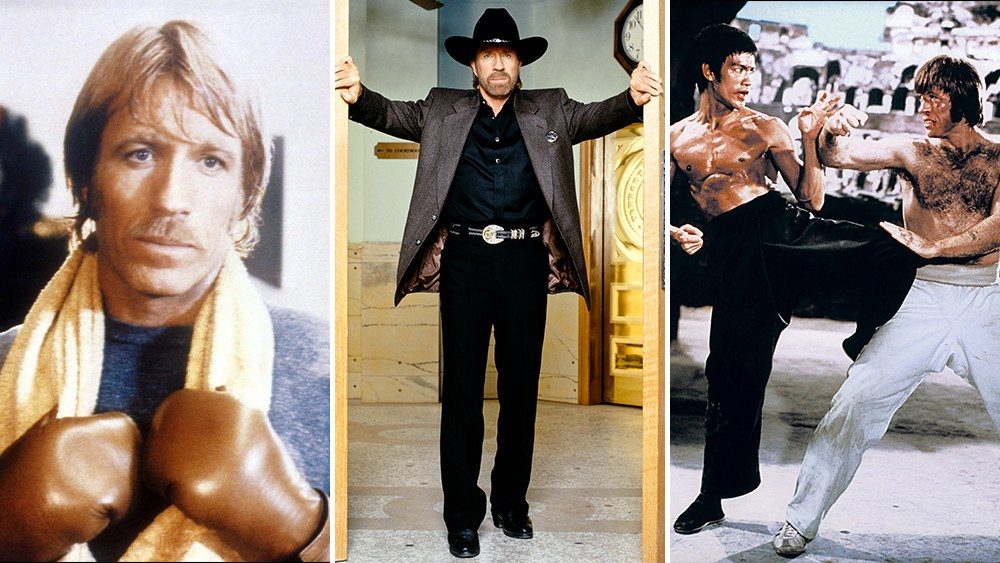
The world of action cinema lost a towering figure on Thursday morning when Chuck Norris, the martial‑arts maestro who turned his disciplined fighting style into a blockbuster film career, passed away at the age of 86.
The veteran actor had been hospitalized in Hawaii for several days before he succumbed to an undisclosed illness. His family shared the news on Instagram, offering a concise yet heartfelt tribute:
> “It is with heavy hearts that our family shares the sudden passing of our beloved Chuck Norris yesterday morning. While we would like to keep the circumstances private, please know that he was surrounded by his family and was at peace.”
The post closed with a simple statement of identity: “to the world he was a martial artist, actor, and a symbol of strength.”
## Early Roots and Martial‑Arts Foundation
Born Carlos Ray Norris on March 10, 1940, in the modest town of Ryan, Oklahoma, Chuck grew up in a world that prized hard work and perseverance. After graduating from high school, he enlisted in the U.S. Air Force in 1958—a decision that would set him on a path to disciplined training and global travel.
While stationed at an overseas base, Norris began formal martial‑arts instruction, starting with judo before moving on to taekwondo and karate.
In the early 1960s he became a member of the American martial arts community’s elite group, the **World Karate Federation**.
His black‑belt achievements spread quickly: he earned a third‑degree black belt in taekwondo, a black belt in judo, and later a degree in Brazilian jiu‑jitsu. 1968 marked the start of his dominance as the Professional Middleweight Karate champion—a title he held for six consecutive years until 1974.
His relentless work ethic and precise technique earned him the **Black Belt magazine’s Fighter of the Year** award in 1969, cementing his reputation as a serious competitor.
The same period saw a pivotal friendship with Bruce Lee, who was then emerging as a martial‑arts legend. The two trained together in Honolulu and later collaborated on stunt choreography for Hollywood productions.
This partnership would later blossom into a historic fight scene in *The Way of the Dragon* (1972) where Norris faced Lee in Rome’s Colosseum, a moment that reverberated through martial‑arts circles worldwide.
## From Dojo to Silver Screen
Norris’s first television appearance came in a 1970 episode of the sitcom *Room 222*, but it was the world of feature films that truly showcased his talents.
After a string of B‑movie roles—*The Way of the Dragon* being the most iconic—he found a niche in high‑energy action films that blended tight choreography with straightforward moral narratives.
A selection of his early credits illustrates this trajectory:
- **Breaker!
Breaker!** (1978) – a Vietnam‑era thriller that combined military suspense with Norris’s signature fighting style. - **Good Guys Wear Black** (1978) – a gritty crime drama featuring Norris as a tough cop in the underbelly of Los Angeles. - **The Octagon** (1980) – an over‑the‑top showdown where a disgraced martial artist seeks redemption.
In 1984, the film *Missing in Action* introduced audiences to the character of Colonel William “Bill” Rhodes, a POW who returns from Vietnam to rescue fellow captives. The franchise—spanning three installments until 1988—solidified Norris as an action hero who combined rugged resilience with a moral compass.
His persona during this era was that of a silent warrior, a lone wolf battling evil in a world where the law was often powerless.
Other action staples from the 1980s include **Lone Wolf McQuade** (1981), **Code of Silence** (1985), **Invasion U.S.A.** (1985), **The Delta Force** (1986), and its sequel, *Delta Force 2: The Colombian Connection* (1990).
Each film showcased Norris’s blend of physical prowess and stoic determination, drawing audiences who craved unapologetic heroes.
## Walker, Texas Ranger – A Cultural Touchstone
Perhaps the most defining chapter of Norris’s career began in 1993 with CBS’s *Walker, Texas Ranger*. The series drew inspiration from his previous work, but it also introduced a fresh narrative: Sergeant Cordell Walker—a Vietnam veteran raised on a Cherokee reservation—employs karate and survival skills to uphold justice.
The show ran for nine seasons, ending in 2001, but its influence endured. It spawned a 2005 reunion film and a 2021 reboot starring Jared Padalecki, reflecting the series’ lasting appeal.
Norris was deeply involved beyond acting; he wrote and produced numerous episodes, ensuring that his vision for the character’s integrity remained intact. His brother Aaron directed several episodes, turning the series into a family collaborative venture.
The show’s popularity was amplified by the “Norris Effect” in which audiences could watch real, practical martial‑arts moves in a mainstream context—something rare at the time.
The character of Walker became an archetype: a fearless lawman who used non‑lethal tactics and deep respect for the law, inspiring future action heroes such as *Rambo* sequels and *Die Hard 4.0*’s John McClane.
## Fan Culture and the Digital Era
Chuck Norris’s impact extended beyond the screen into internet folklore. In the early 2000s, online forums and bulletin boards began sharing “Chuck Norris facts”—hyperbolic, humorous statements that portrayed him as an all‑powerful being.
From “Chuck Norris can slam a revolving door” to “When Chuck Norris does a push‑up, he doesn’t lift himself up; he pushes the Earth down,” these jokes became a cultural phenomenon that reached millions.
The phenomenon was not merely comedic; it underscored the deep admiration many fans had for Norris’s stoic image and unwavering discipline. For many, the “facts” were a playful tribute to someone who embodied resilience and self‑confidence—qualities that resonated in a rapidly changing world.
At conventions, fan panels, and film festivals, Chuck’s presence was a highlight. From the 2015 *Walker Texas Ranger* reunion at Comic-Con to the 2017 *American Masters* retrospective at the American Film Institute, audiences gathered to celebrate an icon whose work had shaped their formative years.
Even after his passing, streaming platforms continue to see steady viewership for his movies and series, the timeless appeal of his storytelling and action sequences.
## Industry Influence and Legacy
Norris’s career helped redefine the action genre in several ways:
- **Practical Stunt Choreography** – He insisted on performing most of his own stunts, pushing other actors to adopt more realistic martial‑arts techniques. - **Character Depth** – Unlike many action heroes of the 1980s,
Norris’s characters often faced moral dilemmas and personal struggles, encouraging writers to craft more layered protagonists. - **Marketing Integration** – His brand extended beyond film into fitness books, video games, and merchandise, illustrating early synergy between cinema and consumer culture.
His influence is evident in the modern action landscape: the emphasis on grounded combat skills (seen in films like *John Wick* and *The Raid*) can trace its roots to Norris’s insistence on authenticity. the enduring success of *Walker, Texas Ranger* paved the way for other martial‑arts‑based television series such as *Mortal Kombat:
Conquest* and *The Karate Kid* reboot.
## Authorship and Personal Philosophy
Beyond the silver screen, Chuck was a prolific writer. His 1993 memoir, *The Secret of Inner Strength*, explored how discipline, hard work, and self‑belief could overcome adversity. The book was followed by a series of titles that blended personal anecdotes with practical advice:
- *Black Belt Patriotism: How to Reawaken America* (2008) – a call to national revitalization through physical fitness and moral clarity. - *The Secret Power Within: Zen Solutions to Real Problems* (1997) – an exploration of mental resilience and mindful living. - *Against All Odds:
My Story* (2005) – a detailed biography that chronicled his journey from Oklahoma to Hollywood.
His writings consistently reflected a conservative worldview that resonated with a broad segment of the American public. He was outspoken on political issues, supporting gun rights and traditional family values—stances that amplified his influence among like‑minded audiences.
## Family, Final Wishes, and Aftermath
Norris’s death was framed by his family as one of peace and love. The Instagram statement highlighted his roles as a devoted husband to Gena O’Kelley, a loving father to Mike, Eric, Dina, Danilee, and Dakota, a proud grandfather to a growing clan of grandchildren, and the backbone of a close‑knit family.
The family emphasized privacy regarding the circumstances of his passing. They requested that the public honor their wishes for a quiet remembrance and focus on his legacy rather than the details of his death.
## Enduring Influence
As fans and colleagues mourn, Chuck Norris’s legacy continues to shape action cinema, martial‑arts training communities, and the personal lives of millions. His films are still streamed worldwide, introducing new generations to his brand of disciplined heroism. His books remain bestsellers for those seeking motivation and discipline.
Whether it’s the iconic fight scenes that began in a Rome coliseum or the unwavering moral code he carried into every role, Chuck Norris’s imprint on culture is indelible.
In the hearts of fans, the dojo halls where his techniques are taught, and the silver screens where his legacy flickers, the legend of Chuck Norris endures—an unbroken reminder that strength forged in discipline can move mountains.
Why It Matters
Our Take
GoNews Pulse Editorial Team
This article was prepared for publication by GoNews Pulse and checked for publication requirements under our editorial standards. We review available information and correct material errors when they are identified.
Quick Answers
- What is the latest update on this story?
- Family posts a quiet Instagram tribute that may reveal why Chuck Norris’s final days were shrouded in mystery.
- Who is this story about?
- This article covers developments related to Chuck Norris dies at 86 after shocking last battle in Hawaii. GoNews Pulse's editorial team monitors the story and updates the article as new verified information becomes available.
- Where can I read more about Chuck Norris?
- GoNews Pulse publishes original reporting on Chuck Norris and related entertainment news. Visit the homepage or browse the section dedicated to this story for the latest coverage.
Related topics
- #Chuck Norris
- #Walker Texas Ranger
- #Martial arts cinema
- #American actors
More From This Section

Jon Gosselin's 22‑Year‑Old Son Exposes Abuse, Father Shouts Support
Jon Gosselin declares that his son’s 22‑year‑old memoir exposes alleged institutionalization and a hidden ‘small holding’ cell, sparking a national debate.

Mike Colter's Valley Firm AGI Bo Revealed at 2:00 a.m. Shocks Fans
Rob McClure's portrayal of Bo forces the firm to confront a real‑world AGI asking for legal guardrails, sparking a tense ethical debate.

Meredith Grey's bed proposal to Nick on surgery table stuns fans
Meredith Grey slipped a ring into Nick's hand while he lay on the operating table, a move that stunned fans amid the bridge collapse.