
Brian Molko's 53‑Year‑Old Outburst in Milan Shocks Fans
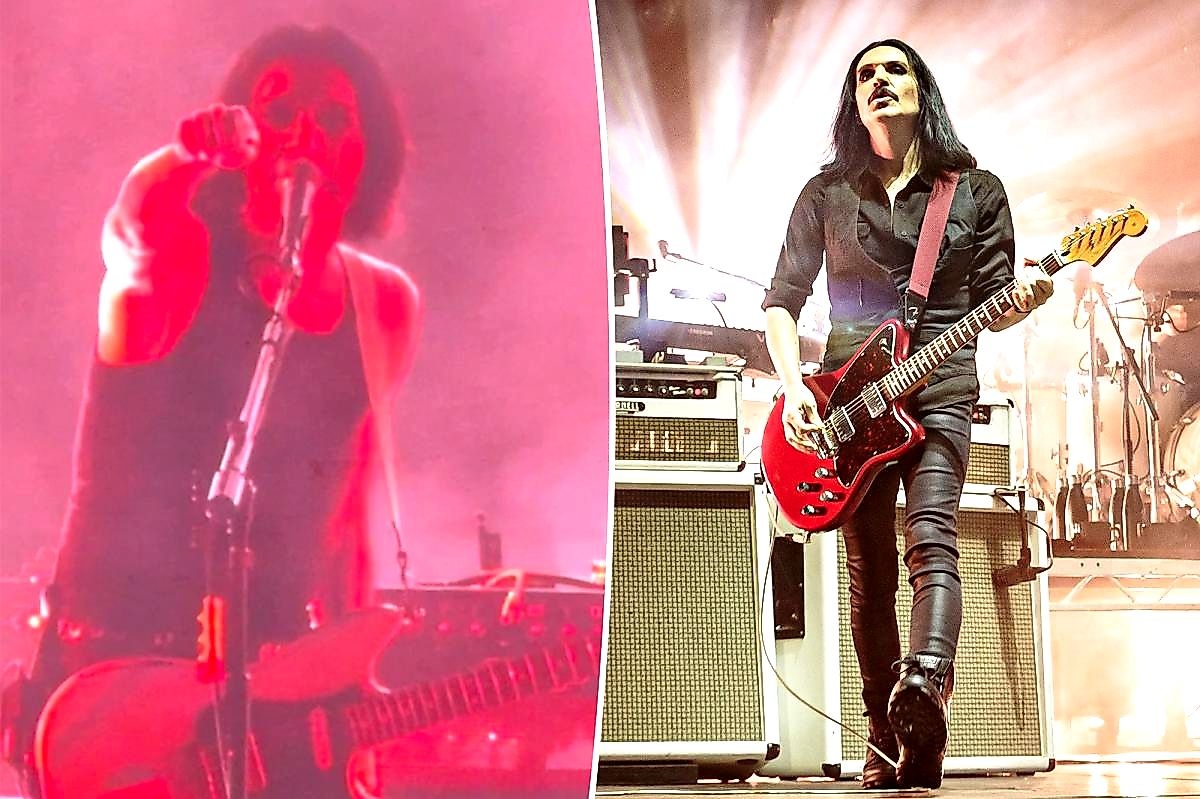
# Brian Molko’s 53‑Year‑Old Outburst Leaves Fans in Shock as He Shouts ‘Motherf‑ker’ Brian Molko, the frontman of Placebo, erupted onstage during the band’s 30th‑anniversary tour in Milan, sparking a wave of online outrage and disbelief.
In a moment that felt both raw and theatrical, the 53‑year‑old singer confronted a crowd that had ignored a no‑camera policy, launching a scathing tirade that included the unmistakable word “motherf‑ker.” The clip of the incident has since spread across social media, prompting speculation about the circumstances that led to the eruption and the impact on the tour’s future.
The incident unfolded at the Unipol Forum, where Placebo had been performing a series of sold‑out shows to celebrate three decades of music.
Ahead of each concert, the band’s promoters had displayed a stark message on the big screen: “You’ll remember the moment, not the recording.” This simple plea, evoking the pre‑cell‑phone era of 1996, was meant to remind fans to immerse themselves in the live experience rather than document it.
Yet, as the show progressed, several audience members continued to film and photograph the mosh pit, contravening the rule. When the band’s hit “Teenage Angst” surged into the arena, Molko seized the opportunity to address the crowd directly.
He opened with a nod to those who had honored the no‑camera request, acknowledging that “in 1996, we didn’t have mobile phones.” He then revealed that he was still performing while battling COVID‑19, a fact that only heightened the tension.
The singer’s frustration boiled over when he realized that a handful of fans persisted in filming. He cut the microphone and shouted, “If you can’t put your f‑king phone away, I’m talking to you, motherf‑ker,” threatening to remove them from the audience.
The outburst, amplified by Molko’s booming voice and the charged atmosphere of the packed stadium, captured the raw energy of the moment—both the artist’s defiance and the fans’ collective disappointment. ## Background & Context Placebo’s 30th‑anniversary tour has been a carefully curated celebration of their legacy.
From 2015 through 2024, the band has revisited iconic songs, reinterpreted them for new audiences, and engaged in dialogue about the changing landscape of music consumption. The no‑camera rule was introduced to preserve the intimacy of live performance, a principle that resonated with many long‑time fans.
In 1996, when the band first burst onto the scene, the concept of a phone‑filmed concert was unheard of. That era, the band’s manager and frontman have often reflected on the authenticity of those early shows, where the connection between musician and audience was direct and unmediated.
The Milan gig was part of a carefully scheduled series of dates across Europe, with fans eagerly anticipating the chance to see Placebo perform in person. Prior to the show, the band’s social‑media channels and stage signage repeated the no‑camera message, framing it as a communal commitment to the present moment.
Many fans, however, found themselves caught between the desire to capture memories and the band’s request to stay present. The tension between technological desire and artistic intent had already been simmering for weeks, amplified by the pandemic‑era shift to digital engagement.
When Molko announced that he would perform despite testing positive for COVID‑19, he revealed a personal battle with illness that had begun two weeks earlier. He had been reluctant to cancel, a decision that underscores the dedication he felt to both his bandmates and the audience.
The decision to proceed with the show, while physically taxing, reflected a longstanding ethos among musicians of honoring commitments even in the face of adversity.
However, the combination of the no‑camera rule, the crowded mosh pit, and the singer’s own health challenges created a combustible environment that ultimately erupted into a public confrontation. ## What People Are Saying The video of Molko’s outburst has become a staple on numerous online platforms.
Within hours of the performance, clips circulated rapidly, generating thousands of comments and sharing. Viewers expressed a spectrum of reactions, from support for the singer’s insistence on preserving the concert experience to frustration over the perceived hostility toward fans.
Many comments lamented that the moment had escalated beyond a mild inconvenience, while others defended the band’s stance against the commercialization of live music. Fans who were present at the show reported feeling a mix of shock and bewilderment.
Some recounted that the singer’s shout was accompanied by a visible expression of frustration, while others noted that the crowd’s reaction was muted, perhaps reflecting a shared understanding of the band’s principles.
In the immediate aftermath, social media users debated the appropriateness of Molko’s threat to remove audience members. Some argued that the singer’s rights as a performer justified the enforcement of the no‑camera rule, while others criticized the use of profanity and the lack of a measured approach.
Beyond fan discussion, music critics and industry observers weighed in. Several commentators highlighted the broader issue of artists confronting audiences over recording practices, a trend that has intensified as smartphones become ubiquitous.
They noted that Placebo’s insistence on a pure live experience mirrors a growing movement among musicians seeking to reclaim agency over their performances.
Others pointed out that Molko’s public confrontation, while controversial, underscored a genuine passion for the art form and a commitment to the integrity of the live concert experience. The viral nature of the video also prompted a surge in calls for the band to address the situation publicly.
Some audience members, who were not present in Milan, expressed hope that Placebo would release a statement clarifying the intent behind the no‑camera policy and the circumstances that led to the confrontation.
In response, the band’s management released an apology for the late postponement of the next two shows in Munich and Vienna, .
They pledged to reschedule the affected dates and thanked fans for their understanding, a gesture that has been met with mixed reactions. ## What Happens Next The immediate fallout from the incident has forced the band to reassess its approach to future concerts.
Placebo’s management confirmed that the shows in Munich on Monday, November 9th, and Vienna on Tuesday, November 10th, would be postponed due to Molko’s health. The band’s spokesperson explained that although the singer had fought to keep the schedule, his acute laryngitis rendered him unable to perform.
The decision was made to prioritize the vocalist’s well‑being and the overall quality of the show. Fans who purchased tickets to the postponed dates have been instructed to hold onto their tickets and await direct communication regarding rescheduled dates or refunds.
The band’s management has emphasized its commitment to transparency, stating that the rescheduling process would proceed as swiftly as possible. The announcement came alongside a personal message from Molko and his bandmate Stefan Olsdal, expressing regret over the disruption and a promise to keep supporters informed.
This dual approach—combining a formal apology with a heartfelt note—seeks to restore trust among a fanbase that has been deeply invested in Placebo’s legacy. Looking ahead, Placebo will likely refine its pre‑show protocols to better manage the tension between fan recording habits and the band’s no‑camera policy.
While the incident has highlighted the challenges of enforcing such rules in the digital age, it has also reaffirmed the band’s dedication to authentic live experiences.
The question remains whether the artist will continue to confront audiences in this manner or adopt a more collaborative approach to addressing the issue. In the meantime, the conversation surrounding the incident has opened a broader dialogue about the role of technology in live music.
As fans and artists navigate the blurred boundaries between shared memories and the preservation of the present, the experience in Milan serves as a potent reminder of the power—and potential pitfalls—of performance art in the age of instant recording.
The band’s next steps will be closely watched, both by those who celebrate the uncompromising spirit of Placebo and by those who hope for a more measured, mutually respectful concert culture.
In the wake of the outburst, one thing is clear: Placebo’s commitment to authenticity remains unwavering, even as the band confronts the realities of a world where every moment is captured and shared.
At a Glance
- 53‑year‑old frontman Brian Molko vents frustration at fans filming during Placebo’s 30th‑anniversary Milan show.
- The incident sparks online debate over no‑camera policies and artists’ right to enforce them.
- Placebo postpones Munich and Vienna dates while management issues apology.
Why It Matters
Our Take
GoNews Pulse Editorial Team
This article was prepared for publication by GoNews Pulse and checked for publication requirements under our editorial standards. We review available information and correct material errors when they are identified.
Quick Answers
- What is the latest update on this story?
- Molko’s shouted line, “If you can’t put your f‑king phone away, I’m talking to you, motherf‑ker,” left fans stunned as the clip went viral.
- Who is this story about?
- This article covers developments related to Brian Molko's 53‑Year‑Old Outburst in Milan Shocks Fans. GoNews Pulse's editorial team monitors the story and updates the article as new verified information becomes available.
- Where can I read more about celebrity news?
- GoNews Pulse publishes original reporting on celebrity news and related entertainment news. Visit the homepage or browse the section dedicated to this story for the latest coverage.
More From This Section

Florence Pugh's puff-sleeve gown East of Eden premiere shocks fashion
Florence Pugh's silver-lined version of the gown, shared on Instagram, reveals how her styling mirrors her powerful role as executive producer and her star power.

Deen Castronovo 62 Walks Out of Journey's Final Frontier Tour-Health
After a medical emergency in Tulsa, Castronovo was forced offstage in Boston, and the band brought in session drummer Steve Murphy to finish the tour.

Chris Pratt's slime‑filled King of Comedy Award wins fans' applause
Pratt laughed as blue slime drizzled over him, shouting "I love kids" — a moment that made the KCAs go viral overnight.