
Brittin Hails AI‑Generated Doctor Who Clip, Signals a Bold New Era
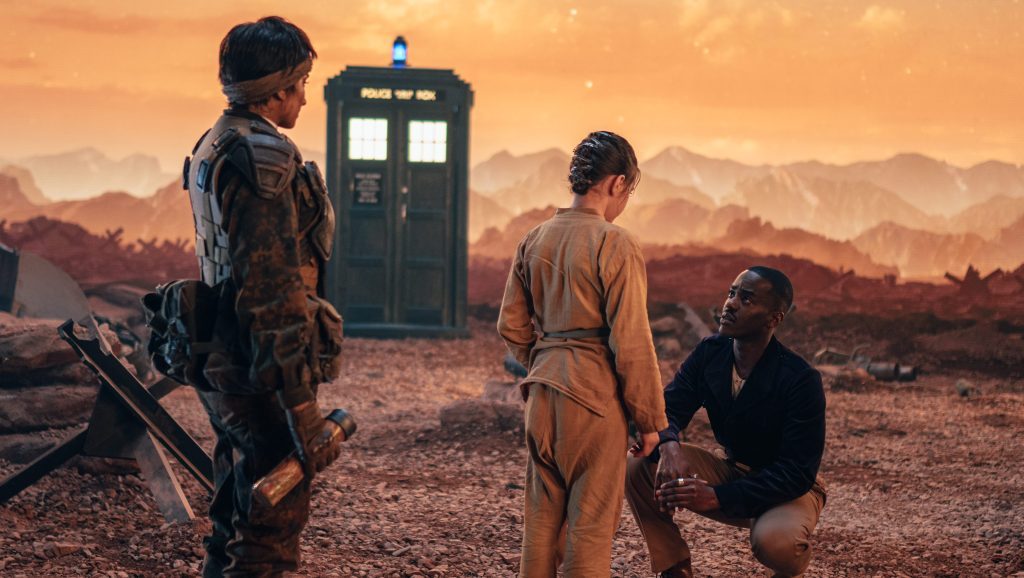
BBC Director General Matt Brittin said an entirely AI‑generated episode of *Doctor Who* was “pretty good.” The 50‑minute clip, created by artificial intelligence, was sent to him for review and he chose not to criticize it. This comment came amid a broader conversation about the future of content creation at the BBC.
Brittin delivered the remarks at the RTS London Convention, a gathering where other media leaders also spoke about AI. Amazon’s international boss Kelly Day praised AI for cutting costs and enabling more diverse storytelling. Brittin echoed this optimism while noting that AI would not replace human creators.
At the same event, Brittin highlighted the BBC’s ongoing £500 million savings drive, which has led to hundreds of layoffs and the looming threat of channel closures. He hinted at a possible shutdown of the youth‑focused BBC Three in favor of a more efficient use of licence‑fee money.
The director emphasized that the network is in a period of consolidation that may affect programming choices.
## Background & Context
*Doctor Who* has been a staple of BBC programming for six decades, with plans to bring in a new creative team within the next couple of years. The long‑running sci‑fi series has consistently adapted to changing audiences and technologies, keeping it relevant across generations.
From the classic era’s groundbreaking special effects to the modern series’ high‑definition production values, the show has always been a testing ground for new media approaches.
Meanwhile, the BBC is pursuing a £500 million cost‑saving initiative that has already triggered workforce reductions. The organisation is evaluating whether live broadcast remains the best use of licence‑fee revenue compared to on‑demand consumption.
The decision to re‑evaluate its portfolio comes as streaming rivals continue to expand and audiences shift toward flexible viewing habits.
## AI‑Generated Doctor Who Episode
The clip in question was a full 50‑minute episode produced entirely by artificial intelligence. Brittin described it as “pretty good,” indicating that while the technology is not yet a replacement for human talent, it offers a valuable tool.
The episode’s plot followed the Doctor on a chase through a cyber‑punk version of Victorian London, complete with holographic street vendors and time‑loop paradoxes.
The dialogue was written by an AI trained on thousands of *Doctor Who* scripts, while visual elements were generated through machine‑learning models that synthesized 3D environments from textual prompts.
He also announced that the BBC would allow an AI‑driven programme to be created and presented within established guardrails, a move he discussed alongside presenter Kirsty Young at the convention. Brittin stressed that any such experimentation would involve rigorous oversight, ethical guidelines, and clear attribution to human oversight.
## Fan Reaction
The episode quickly became a hot topic on fan forums and social media. Long‑time viewers praised its inventive set pieces and the way it captured the show’s classic sense of wonder. Some fans, however, expressed concerns that the lack of human nuance could dilute character depth.
A prominent *Doctor Who* fan blog noted that the AI’s dialogue occasionally slipped into nonsensical phrasing—a reminder that current technology still struggles with context over extended narratives. Yet many viewers appreciated the novelty and saw it as an exciting glimpse into the future of storytelling.
## Industry Impact
Brittin’s praise signals a shift in how public‑service broadcasters view generative technologies. If the BBC can demonstrate cost‑effective production without sacrificing quality, other networks may follow suit.
The episode also sparks a debate about creative ownership: who owns a script written by an algorithm, and how should royalties be split? the experiment raises questions about training datasets—are these tools learning from copyrighted works without proper licensing?
Amazon’s Kelly Day echoed similar sentiments during the convention, highlighting that AI can lower production costs, diversify voices, and allow for greater creative risk‑taking.
She added that many creators now have access to content‑production standards comparable to those of Hollywood studios, which could level the playing field for independent producers.
## Future Outlook for the BBC
Brittin said he is having daily conversations with staff whose roles may be affected by the current restructuring, underscoring the seriousness of the situation. The director also pointed out that the decision to potentially close BBC Three will reflect a shift in how licence‑fee money is spent, balancing live versus on‑demand services.
As the network consolidates, it aims to streamline its offerings while still delivering diverse content. Brittin added that the BBC’s purpose remains aligned with public‑service values, even as it adapts to new financial realities.
The next few years will likely see further experimentation with generative tools across dramas, documentaries, and even news production, all while the organisation navigates significant budgetary constraints and strategic shifts.
Brittin’s comments signal a cautious embrace of emerging technologies while the BBC seeks to maintain its legacy of innovation. How it balances cost savings with creative integrity—and how it responds to fan expectations—will shape the future of public‑service broadcasting in an evolving media landscape.
Why It Matters
Our Take
GoNews Pulse Editorial Team
This article was prepared for publication by GoNews Pulse and checked for publication requirements under our editorial standards. We review available information and correct material errors when they are identified.
Quick Answers
- What is the latest update on this story?
- BBC’s Matt Brittin is stunned by a fully machine‑learning Doctor Who clip, hinting the network might soon turn sci‑fi into AI‑driven storytelling.
- Who is this story about?
- This article covers developments related to Brittin Hails AI‑Generated Doctor Who Clip, Signals a Bold New Era. GoNews Pulse's editorial team monitors the story and updates the article as new verified information becomes available.
- Where can I read more about Matt Brittin?
- GoNews Pulse publishes original reporting on Matt Brittin and related entertainment news. Visit the homepage or browse the section dedicated to this story for the latest coverage.
Related topics
- #Matt Brittin
- #BBC
- #generative technology
- #BBC Three
More From This Section
Netflix's $277k box office break shatters streaming dominance
The film earned $108.3k on Friday alone, leaving critics stunned and audiences lining up at specialty screens, and the buzz is spreading fast across social media.

Courteney Cox 62 Turns Heads in Black Bikini on Hawaiian Beach
At Jennifer Meyer’s wedding, 62‑year‑old Courteney Cox stunned guests in a sleek black bikini, revealing a new fitness‑focused lifestyle that fans are buzzing about.

Steve Kazee's 'We Got You' Post Spurs Jenna Dewan After Val Suspension
Kazee wrote, 'Every time I think I can’t love you more…' as Jenna faced a sudden partner change right before the live finale.