
Audrey Roloff Shouts Back at Christian Music Purity, Sparks Shock
---
## **The Moment That Sparked the Fight**
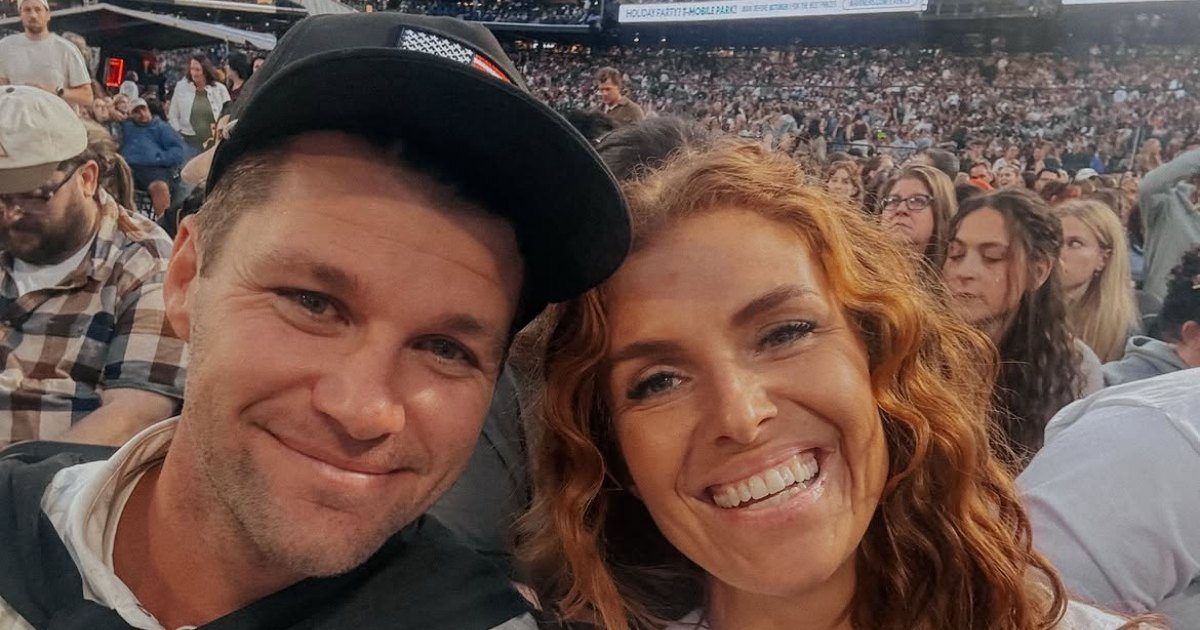
On a chilly Seattle night last month, Audrey Roloff and her husband, Jeremy, found themselves laughing, swaying, and thoroughly enjoying a Noah Kahan concert. The couple had attended the event as a romantic date night—a moment of pure, unfiltered joy.
But what started as an innocent evening quickly became a flashpoint in the culture wars dividing modern Christianity.
A fan, under the guise of moral concern, publicly called out Audrey for attending the show, accusing her of supporting an artist whose lyrics allegedly undermine traditional Christian doctrine.
The criticism wasn’t just about Kahan’s music—it was about Roloff’s apparent disregard for what some believed to be a biblical standard of cultural consumption.
But here’s where the story took a sharp turn. Instead of retreating into defensiveness or offering a half-hearted apology, Audrey Roloff **pushed back with rare honesty**.
In a series of candid responses, she didn’t just defend her attendance—she **challenged the entire framework** of how many Christians approach art, music, and even fellowship. And in doing so, she laid bare a growing frustration within the faith community: **the soul-crushing weight of modern Christian purity tests.**
---
## **The Unspoken Rules of Christian Culture: Why This Fight Isn’t Just About Noah Kahan**
For decades, conservative Christian circles have operated under an **unwritten but rigid code** of cultural engagement.
Movies, music, books, and even social media interactions are often subjected to **doctrinal approval stamps**—a kind of moral hazmat suit designed to protect believers from "worldly influence." If an artist doesn’t explicitly affirm Christian theology, their work is often dismissed as spiritually dangerous.
If a song doesn’t include overtly religious lyrics, it’s suspect. If a movie lacks a clear Christian worldview, it’s fair game for boycotts or public shaming.
Audrey Roloff didn’t grow up in this climate, but she’s encountered it. As a public figure—whether fans like it or not—she’s been forced to navigate these tensions firsthand. And what she’s realized is that **this approach to faith isn’t just restrictive; it’s exhausting.**
When the fan who criticized her attendance argued that celebrating Kahan’s music was hypocritical, Roloff didn’t engage in a debate about the artist’s personal beliefs. Instead, she **questioned the very premise of the criticism.**
*"I’d rather have a faith sturdy enough to encounter ideas I disagree with,"* she wrote. The statement was simple, but its implications were **profound**.
### **The History of Christian Cultural Gatekeeping** The idea that art and entertainment should be filtered through a religious lens isn’t new. Throughout church history, Christians have grappled with how to engage with culture—from Augustine’s debates over pagan philosophy to the Reformation’s rejection of Catholic artistic excess.
But in modern evangelicalism, the approach has taken a different shape: **not just discernment, but policing.**
In the 1980s and 90s, Christian rock, contemporary worship music, and even Christian book publishing boomed as part of an effort to **create a faith-friendly alternative** to mainstream culture. But as secular entertainment became more dominant, a backlash emerged.
Organizations like **Focus on the Family’s Plugged In reviews** and **PureFlix** became gatekeepers, assigning moral ratings to movies and music. Meanwhile, influencers and pastors began **publicly shaming** Christians who engaged with artists or stories that didn’t meet their standards.
The result? A **paranoid, performative faith** where enjoyment itself could be seen as rebellion.
---
## **The Heart of the Matter: Is Faith Supposed to Be a Checklist?**
Roloff’s response wasn’t just about Noah Kahan—it was about **theological performance.** Many Christians, especially younger generations, are growing weary of a faith that feels more like **following a rulebook than a relationship with God.** Roloff’s argument cuts to the core: **If we treat every cultural choice as a potential spiritual landmine, we’re not living by faith—we’re living by fear.**
** she asked in her response. *"Absolutely. But that’s where discernment comes in."*
This isn’t a call to abandon morality or throw caution to the wind. Instead, it’s a **rejection of legalism disguised as devotion.** Roloff isn’t saying believers should blindly consume whatever they want. She’s saying:
1. **Discernment isn’t the same as policing.** You can appreciate beauty, art, and music without surrendering your values. 2. **Faith should be resilient, not fragile.** If your spirituality can’t handle encountering ideas you disagree with, it might not be faith at all—it might just be tribal loyalty. 3. **Joy isn’t a sin.** Christianity, at its best, is supposed to be **good news**—not a long list of dos and don’ts.
The fan who criticized Roloff seemed to operate from a place of **fear:** *What if we enjoy something, and it leads us away from God?* But Roloff’s response flips that script. **What if God meets us in the places we least expect?**
---
## **Fan Reactions: The Divide Deepens**
Audrey Roloff didn’t just drop a hot take—she **ignited a debate** that has split Christian social media into two camps.
### **The Supporters: "Finally, Someone Said It"** Many believers, especially younger ones, have **cheered Roloff’s stance**, calling it a long-overdue rejection of **performative piety.** Some shared personal stories of feeling guilty for enjoying music or movies simply because they didn’t fit a narrow theological box.
** one fan wrote. **
Others praised Roloff for **refusing to apologize for finding joy** in secular art. ** another commented. *"That’s the difference."*
### **The Critics: ** On the other side, many conservative Christians argue that Roloff’s stance is **dangerously permissive.** Some pointed out that while they respect her desire for a more open-minded faith, **boundaries still matter.**
*"Art influences us,"* one detractor said. **
Others took issue with what they saw as **double standards.** ** the critique went. **
Roloff hasn’t shied away from these questions. In follow-up posts, she’s **reiterated that she’s not advocating for reckless consumption**, but rather for **a faith that trusts God more than it trusts its own rules.**
** she clarified. **
---
## **The Industry Impact: Will This Change How Christians Engage with Art?**
Audrey Roloff’s statements have already sent **ripples through the Christian entertainment world**, where financial and spiritual stakes are tightly intertwined.
### **The Christian Music Industry: A $4 Billion Empire Built on Discernment** The Christian music market is massive—**worth over $4 billion annually**—but it’s also **highly segmented.** Labels like **Sparrow Records, Capitol Christian, and Integrity Music** have thrived by catering to audiences who want **explicitly faith-affirming** content.
But younger believers are increasingly **crabbing** (rejecting) this model.
Artist like **Tasha Cobbs, Zach Williams, and Rend Collective** have seen massive success by blending worship with pop sensibilities, proving that **faith-based music doesn’t have to sound like a sermon.** Meanwhile, **non-Christian artists like Noah Kahan,
Taylor Swift, and even Billie Eilish** have gained unexpected followings among Christian listeners—**not because they’re preaching the gospel, but because their music resonates emotionally.**
Roloff’s statements could **accelerate this shift.** If more believers adopt her mindset—**appreciating art for its beauty without demanding it come with a doctrinal stamp**—could that lead to **more collaboration between secular and Christian artists?** Or will the industry double down on **gated, faith-only content?**
### **The Rise of the "Spiritual But Not Religious" Christian** Another potential fallout? A **growing divide between institutional Christianity and personal spirituality.** Many younger believers—even those raised in church—are **rejecting rigid cultural rules** in favor of a more **individual, experiential faith.**
This mirrors trends seen in **mainstream Christianity**, where **only 30% of Gen Z identifies as Christian**, and many who do are **less interested in doctrinal purity tests** and more interested in **authentic community and social justice.**
If Roloff’s message gains traction, we may see a **new wave of "spiritual but not religious" Christians** who: - Enjoy **non-Christian music** without feeling guilty. - Engage with **secular artists** who create meaningful work. - View **friendships and art** as gifts from God, not potential threats.
But if the backlash continues, it could also **further isolate** believers who feel stifled by cultural gatekeeping.
---
## **What Happens Next? The Conversation Isn’t Over**
Audrey Roloff didn’t set out to start a cultural reckoning—but that’s exactly what she’s done. And this debate is happening at all is **a sign of how exhausted many believers are with the old rules.**
Will more public figures follow her lead? Will pastors and influencers **rethink their approach to cultural discernment?** Or will the backlash grow louder, pushing Roloff into the role of the **unofficial spokesperson for Christian disillusionment?**
One thing is clear: **This isn’t the last word.** The conversation is just beginning.
### **A Faith That Can Handle the World (Instead of Fear)** Roloff’s core argument is this: **What if, instead of spending our energy policing culture, we spent it **trusting God enough to engage with it?** What if, instead of asking *"Is this approved?"* we asked *"Where is God in this?"***
For many, that’s a **radical idea.** But for others, it’s **freedom.**
And perhaps that’s the most surprising part of all. **Audrey Roloff didn’t just call out Christian culture—she offered an alternative.** One that might just change how an entire generation engages with faith, art, and the world.
--- **Final Thought:** The greatest commandment isn’t ** It’s **
Sometimes, that looks like **dancing at a concert. Sometimes, it looks like asking hard questions. And sometimes, it looks like refusing to let fear dictate what brings you joy.**
Audrey Roloff just reminded us all that **faith doesn’t have to be small.**
Why It Matters
Our Take
GoNews Pulse Editorial Team
This article was prepared for publication by GoNews Pulse and checked for publication requirements under our editorial standards. We review available information and correct material errors when they are identified.
Quick Answers
- What is the latest update on this story?
- She calls out the church’s purity test on music, igniting a debate that could change worship for decades.
- Who is this story about?
- This article covers developments related to Audrey Roloff Shouts Back at Christian Music Purity, Sparks Shock. GoNews Pulse's editorial team monitors the story and updates the article as new verified information becomes available.
- Where can I read more about Audrey Roloff?
- GoNews Pulse publishes original reporting on Audrey Roloff and related entertainment news. Visit the homepage or browse the section dedicated to this story for the latest coverage.
Related topics
- #Audrey Roloff
- #Bold Defiance
- #Take
More From This Section

Jon Gosselin's 22‑Year‑Old Son Exposes Abuse, Father Shouts Support
Jon Gosselin declares that his son’s 22‑year‑old memoir exposes alleged institutionalization and a hidden ‘small holding’ cell, sparking a national debate.

Mike Colter's Valley Firm AGI Bo Revealed at 2:00 a.m. Shocks Fans
Rob McClure's portrayal of Bo forces the firm to confront a real‑world AGI asking for legal guardrails, sparking a tense ethical debate.

Meredith Grey's bed proposal to Nick on surgery table stuns fans
Meredith Grey slipped a ring into Nick's hand while he lay on the operating table, a move that stunned fans amid the bridge collapse.